How to Get a Grunge Guitar Tone
Dial in an authentic grunge guitar tone with the right pickups, amp settings, fuzz, and EQ. A practical, gear-specific guide for chasing that Seattle sound.
A great grunge guitar tone isn’t about expensive gear or surgical precision. It’s about controlled ugliness: a thick, midrange-heavy wall of distortion that still lets the riff cut through. If you want to nail that sound, you need to understand the few ingredients that actually matter, because the bands who built it mostly worked with cheap guitars, loud amps, and one or two pedals. This guide walks through exactly how to get a grunge guitar tone, from pickup choice to amp EQ to the fuzz pedals that defined the era.
What makes a great grunge guitar tone
Strip away the mythology and a grunge tone comes down to four things: a hot, saturated gain stage, a strong midrange, a tight-but-loose low end, and the dynamics to go from a clean verse to a brutal chorus. That last part matters more than people think. The classic loud-quiet-loud structure of bands like Nirvana only works if your tone cleans up when you back off the pickups.
Unlike metal, where scooped mids and gated precision rule, grunge lives in the mids. The sound is deliberately a little broken, a little woolly. Think of the difference between a polished hard-rock solo and the murky chug of Soundgarden. The goal is heaviness with grit, not heaviness with clarity. Critics at Rolling Stone have spent years trying to pin down that murky quality, and it always comes back to the midrange.
Start with the guitar
You don’t need a vintage instrument, but pickup type shapes everything. Humbuckers give you the thick, hot output that drives an amp into natural breakup. Single-coils give you a brighter, snappier bite that cleans up beautifully for quiet passages. Plenty of grunge records used both.
- Humbuckers (Gibson Les Paul, SG, or any HH guitar): fatter, louder, easier to push into sludge. Kurt Cobain leaned on a Univox Hi-Flier and modified Fender Jaguars and Mustangs, often loaded with hotter humbuckers.
- Single-coils (Stratocaster, Telecaster): more dynamic range and chime. Great for the loud-quiet-loud trick.
- Strings and tuning: heavier strings (.011 or .012 gauge) hold up under aggressive picking and lower tunings. Many bands tuned down a half step or further to thicken the sound, a trick you can read about on Wikipedia’s guitar tunings page.
Whatever you play, set your bridge pickup as the workhorse for riffs and keep the neck pickup ready for cleaner moments. A used Les Paul or Jaguar on Reverb will get you most of the way there without a boutique budget.
Dial in the amp
The amp is where the tone is born. Grunge guitarists favored loud tube amps cranked into power-amp distortion, but you can approximate it at any volume. The two classic platforms are a Marshall JCM800 for tight British crunch and a Mesa/Boogie or Fender for a thicker American voice. For specific rigs, see our guide to iconic grunge guitars and amps.
Here’s a reliable starting point for a high-gain channel:
| Control | Setting | Why |
|---|---|---|
| Gain / Drive | 6–7 | Saturated but not fizzy; leaves room for pick dynamics |
| Bass | 6 | Weight without mud |
| Mids | 7–8 | The heart of grunge; never scoop these |
| Treble | 5–6 | Enough bite to cut, not ice-pick harsh |
| Presence | 4–5 | Tames fizz on the high end |
| Master Volume | As loud as you can stand | Power-tube saturation adds the magic |
The single most important move is to resist scooping the mids. Metal players carve them out; grunge players push them up. That midrange honk is what makes the riff sound angry instead of distant.
Add the right dirt
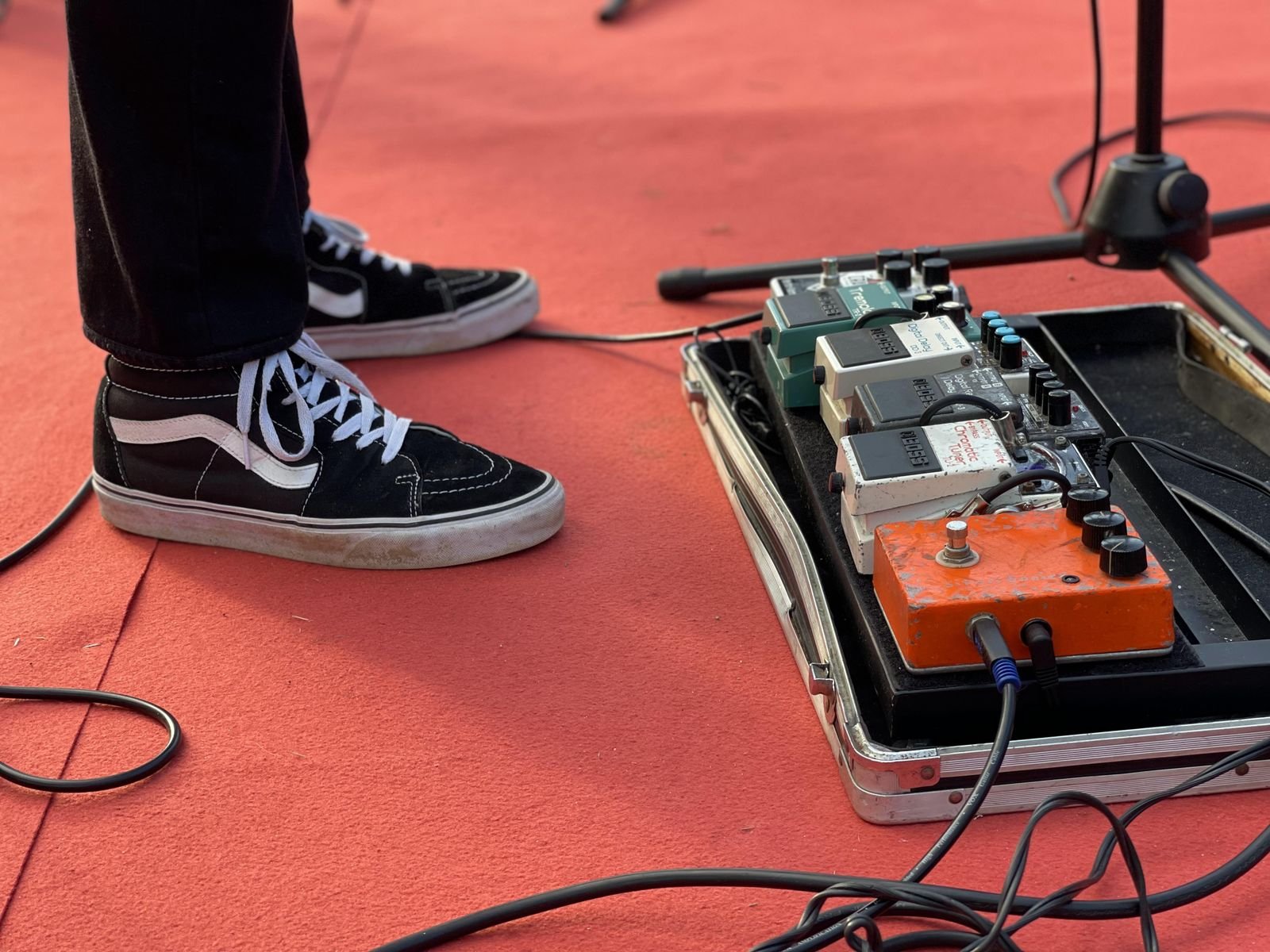
Most grunge rigs ran the amp’s own gain plus one pedal for extra saturation or texture. The undisputed king is the Electro-Harmonix Big Muff, a fuzz with a thick, almost violin-like sustain that Smashing Pumpkins, J Mascis, and countless others built whole records around. A Big Muff into a slightly cranked amp is a shortcut to the classic sound.
Other essentials worth chasing:
- Big Muff Pi (or a clone): massive, woolly fuzz for leads and crushing chords.
- ProCo RAT: grittier, more aggressive distortion with a sharper edge; Thurston Moore and Kurt Cobain both used one.
- Boss DS-1 / DS-2: affordable, mid-forward distortion that stacks well in front of an amp.
- Boss DM-2 or any analog delay: subtle slap-back to thicken cleans, not a wash of ambience.
You can grab most of these new from Sweetwater for under a hundred bucks each. For a deeper dive into stacking and ordering, read our rundown of the essential pedals for grunge tone.
Play it like grunge
Gear gets you 80 percent there; technique does the rest. Grunge guitar is about attack and feel. Dig in hard on the choruses, ease off for the verses, and let the amp’s natural compression do the work. Palm-mute the low strings for that percussive chug, then open up for ringing power chords.
A few habits that sell the sound:
- Use your guitar’s volume knob as a second gain control. Roll it back to 6 for clean verses, slam it to 10 for the chorus.
- Don’t over-tighten the low end. A little flab in the bass is part of the vibe.
- Embrace feedback. Standing close to a loud amp and letting a note bloom into controlled squeal is pure Seattle.
- Pick near the bridge for a harder, more cutting attack; move toward the neck for a rounder, warmer verse tone.
The players who defined this sound rarely thought of themselves as virtuosos. Kurt Cobain famously prized feel and energy over technical flash, and that attitude is baked into the tone itself. A slightly sloppy, fully committed performance beats a clean, hesitant one every time in this genre.
Cabinets, speakers, and recording
The last link in the chain is what moves the air. Grunge rhythm tones almost always came from real 4x12 or 2x12 cabinets loaded with Celestion-style speakers, miked up close. That speaker breakup is a huge part of the character, so if you’re playing through a modeler or an amp sim, choose a cab impulse with a broken-in, midrange-rich voice rather than a pristine modern one.
When recording, a few moves keep the tone from collapsing into mush:
- Mic the cabinet with a Shure SM57 angled slightly off the speaker’s center for grit without harshness.
- Double-track your rhythm guitars, hard-panning left and right, to build the wall of sound without piling on gain.
- Leave headroom. Over-distorting each track turns a stack of guitars into a fizzy blur; a little restraint per track sounds heavier in the mix.
Bands cut these records loud and committed, and engineers at studios documented across Sub Pop history embraced the rawness rather than polishing it out. That honesty is the secret ingredient.
The bottom line
Getting a grunge guitar tone is less about chasing a specific pedal and more about combining a saturated, mid-heavy amp with dynamic playing and one good fuzz. Push your mids, crank your amp, keep a Big Muff or RAT on the floor, and use your volume knob like an instrument. Sites like Sweetwater’s gear guides and the deep listings on Reverb make it cheap to experiment. Start with what you have, get loud, and let the tone be a little ugly. That’s the whole point.