Recording a Lo-Fi Grunge Sound on a Budget
A practical guide to lo-fi grunge recording on a budget: cheap mics, the 4-track cassette aesthetic, room miking tricks, and DAW tips for raw, real tone.
The dirty secret of grunge is that a lot of the records you love were made cheap and fast, and they sound better for it. Lo-fi grunge recording isn’t about expensive gear or pristine fidelity — it’s about capturing a band in a room with enough grit to feel dangerous. You can chase that same raw, blown-out energy in a bedroom with a couple hundred dollars of equipment, and this guide walks through exactly how.
Why lo-fi suits grunge in the first place
Grunge was a reaction against the polished, gated-reverb sheen of ’80s rock. The whole point was to sound like a band, not a product. Bleed between instruments, room ambience, a little distortion on the way in — these aren’t flaws in this genre, they’re the texture.
That aesthetic was baked in from the start. Early Sub Pop singles were tracked quickly and cheaply, often by producer Jack Endino at Reciprocal Recording in Seattle for a few hundred dollars a session. Endino’s records with Mudhoney, Soundgarden, and the band that became Nirvana proved you didn’t need a million-dollar console to make something that hit like a truck. If you want the label backstory, our piece on the history of Sub Pop Records digs into how that scrappy approach became a brand.
So when you set out to record a lo-fi grunge sound on a budget, you’re not settling for a compromised version of “real” production. You’re chasing the actual target. The records that defined the genre — Mudhoney’s Superfuzz Bigmuff, Nirvana’s Bleach, Soundgarden’s early EPs — were tracked fast, loud, and on a shoestring. Bleach reportedly cost around $600 to record. That number isn’t trivia; it’s a permission slip. It tells you that the difference between you and those records is mostly attitude and a few good microphones, not a mortgage-sized studio bill.
The cheap microphone arsenal that actually works
You need fewer mics than you think, and the classics are cheap because they sell by the millions. A dynamic mic is forgiving, handles loud sources without distorting, and ignores room noise — perfect for a bedroom.
- Shure SM57 — the workhorse for guitar amps and snare drums. Roughly $100 new, cheaper used, and basically indestructible. Check the Shure SM57 page for specs, or grab a used one on Reverb.
- Shure SM58 — the SM57’s cousin with a built-in pop filter, ideal for snarling vocals.
- A budget large-diaphragm condenser — something like an Audio-Technica AT2020 for room and acoustic work, under $100.
- A cheap dynamic for kick — even a second SM57 or an old PA mic will do at this level.
Two SM57s and a condenser cover almost everything a four-piece needs. Don’t overthink it.
The reason dynamics rule the budget studio is physics. They have no internal preamp to overload, they reject the off-axis sound of a noisy room, and they laugh at the kind of sound-pressure levels that make a delicate condenser fold. Point one at a cranked 4x12 and it just works. The thing to skip at this stage is a pile of boutique ribbon mics and expensive preamps. They’re wonderful, but they reward a treated room and a careful engineer — neither of which is the lo-fi grunge brief. Put your money into a loud amp and a couple of these classics, and put your time into getting the performance right.
One more cheap upgrade worth mentioning: a basic audio interface with two decent mic preamps. A Focusrite Scarlett 2i2 or similar runs around $200 and gives you clean gain, phantom power for the condenser, and enough inputs to track a guitar amp with two mics at once. That’s the entire front end of a record for the price of a nice dinner for four.
Embrace the 4-track cassette aesthetic
Nothing says lo-fi like the saturated, slightly wobbly sound of a cassette four-track. Machines like the Tascam Portastudio were how thousands of bands cut demos in the ’80s and ’90s, and that tape compression is a sound in itself — it rounds off harsh transients and glues a mix together for free.
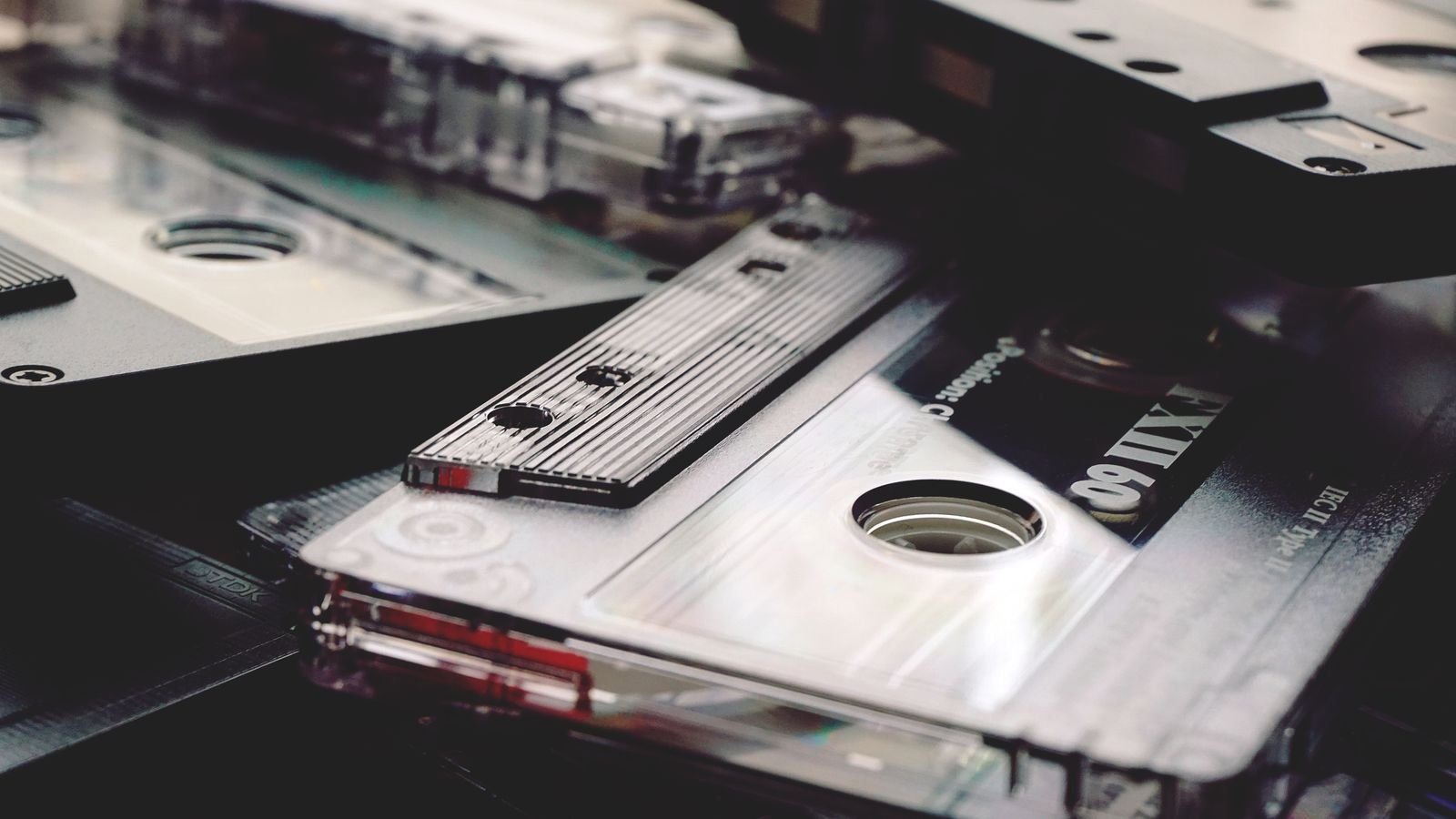
You can still find working Portastudios on Reverb for $80 to $200. Bounce a full band to four tracks, accept the limitations, and you’ll get hooked on how decisive it forces you to be. If a tape machine isn’t realistic, you can fake the vibe in software: tape-emulation plugins, a touch of wow and flutter, and a hard roll-off above 12 kHz get you most of the way there. The cassette look matters less than the cassette behavior — gentle saturation and limited headroom.
Room miking: turn a bad room into an asset
You probably don’t have a treated studio. Good. Grunge thrives on room sound, and a little reflectivity adds the live, in-the-room quality that defines records like Bleach.
Here’s a simple, effective approach to tracking a loud guitar amp:
- Close-mic the cab. Put an SM57 an inch from the grille, just off-center between the cone’s dust cap and edge. This is 80% of your tone.
- Add a room mic. Place a condenser six to ten feet back, pointed at the amp. Blend it in for size and grit.
- Crank the amp, not the DAW. A real amp moving real air is the secret. Get the grunge guitar tone at the source instead of fixing it later.
- Check phase. Flip the polarity on the room mic and keep whichever setting sounds fuller.
- Commit. Print the blend. Don’t leave it for “later.”
For drums, a single overhead condenser plus a kick mic — the classic Glyn Johns-lite setup — sounds more like a band than a clinical multi-mic kit. Embrace the bleed. If you’ve got a third mic, hang it in the doorway or down the hall and slam it with a compressor for a trashy, exploding room sound. That “destroyed room mic” trick is responsible for some of the most violent-sounding drum tracks in rock, and it costs nothing but a spare input.
The mindset shift here is the whole game. A pro studio spends thousands isolating instruments so they can control every element in the mix. You’re doing the opposite on purpose. Bleed glues a band together, makes the drums sound like they’re in a real space, and gives a recording the cohesion that overdubbed, isolated tracks often lack. When the snare leaks into the guitar mic, that’s not a problem to solve — it’s the sound of a band in a room, which is the only sound grunge ever really wanted.
DAW tips for a raw, real sound
Any modern DAW will out-spec a ’90s studio, so the trick is using it with restraint. Reaper is famously cheap (a $60 personal license) and runs on anything; GarageBand is free on a Mac. The software barely matters. What matters is your discipline.
| Lo-fi move | Why it works |
|---|---|
| Track loud, leave headroom | Saturation on the way in beats fixing a thin signal later |
| Minimal EQ surgery | Carve mud, don’t sculpt perfection — grunge isn’t surgical |
| Light bus compression | Glue the mix; let it breathe and pump a little |
| Tape/saturation plugin on the master | Softens digital harshness, mimics the cassette feel |
| Avoid quantizing and pitch correction | Human timing and slightly sharp vocals are the whole point |
| Mono and narrow panning | Old records sound centered and dense, not hyper-wide |
Resist the urge to layer twelve guitars. Two rhythm tracks panned hard left and right and one lead up the middle is plenty — it’s exactly how the big records were built, and it leaves room for the bass and vocal to breathe. Stacking too many guitars is the single most common way a home recording turns to mud. When in doubt, mute a track. If the song still rocks, it didn’t need the track.
Vocals deserve the same restraint. Sing into an SM58 a few inches away, add a touch of compression and a slap of room reverb, and stop. The slightly distorted, in-the-red vocal that defines so many grunge records came from singers pushing a cheap dynamic too hard, not from precision studio chains. Let the performance be a little ragged. A perfectly tuned, de-essed, doubled vocal is the sound of a different genre entirely. The recording techniques that make pop shine — heavy compression, surgical tuning, wall-to-wall stereo — are exactly what you want to avoid here. Outlets like Sound on Sound and Tape Op are goldmines if you want to go deeper on raw tracking philosophy.
The bottom line
A lo-fi grunge recording lives or dies on performance and attitude, not budget. Two dynamic mics, a loud amp, a reflective room, and a willingness to commit will beat a fortune in gear used timidly. Track it hot, keep the bleed, lean on tape-style saturation, and stop polishing before the life drains out of it. The records that defined this sound were made for the price of a used car payment — yours can be too. When you’ve got the recording chain sorted, dial in the front end with our guide to grunge guitar tone.